
The short answer
What makes one surfboard different from another?
Length, width, thickness, volume, outline, rocker, rails, bottom shape, tail and fins all contribute to how a board feels. More foam and a wider platform can help with flotation and stability, while the full design decides how that support translates into paddling and turning.
For a first-time surfer, the best board is usually the one that gives you enough stability and flotation to catch waves, stand up and repeat the process. You can learn more from ten successful attempts on a supportive board than from struggling to paddle a board chosen because it looks fast.
Surfboard anatomy for someone who has never held one
The pointed or rounded end at the front is the nose. The back end is the tail. The surface you lie and stand on is the deck, while the side facing the water is the bottom. The curved edges running from nose to tail are the rails.
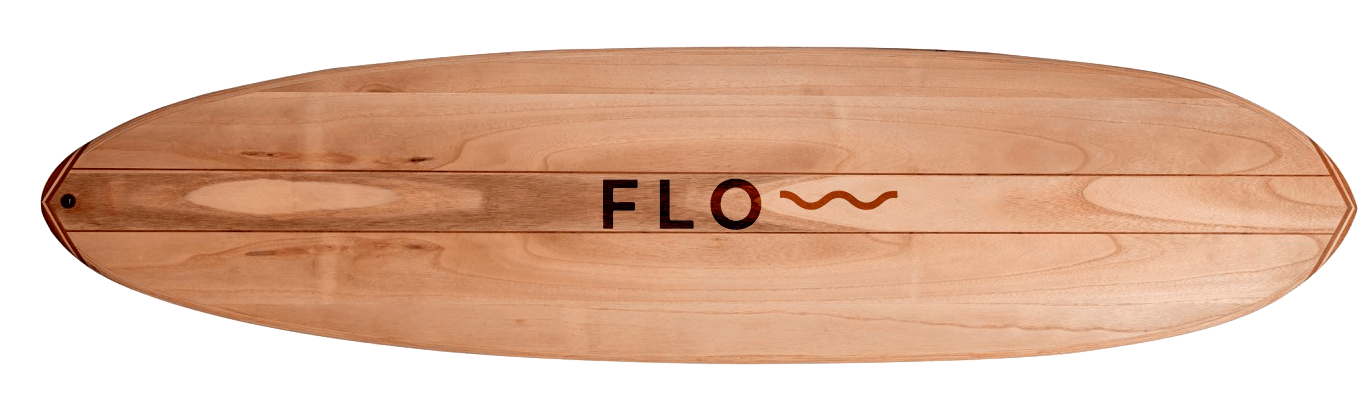
Fins sit underneath the board near the tail and help it hold a line through the water. The leash attaches at the leash plug near the tail and fastens around your ankle or calf. A properly sized surfboard leash is essential equipment, but it is a backup connection to the board, not a substitute for learning how to control it safely.
How to read surfboard measurements
A board label might read 8'0" × 22" × 3" · 70 L. The first number is the length, measured from nose to tail. The second is the width at or near the widest part. The third is the thickness. The final number is the board’s volume in liters.
| Measurement | Example | What it usually changes |
|---|---|---|
| Length | 8'0" | Glide, paddling and how much rail is in the water |
| Width | 22" | Stability, planing area and room under your chest and feet |
| Thickness | 3" | How much foam the board can carry and where that foam sits |
| Volume | 70 L | Total flotation, influenced by the full three-dimensional shape |
Dimensions are useful, but none of them should be read alone. A long board can still feel unstable if it is unusually narrow. A thick board may hide much of its foam in the center and have thin rails. A high-volume board with a very flat deck and boxy rails will behave differently from one with the same liters and more tapered edges.
What surfboard volume actually tells you
Volume is the amount of three-dimensional space inside a board, measured in liters. More liters generally mean more flotation. That can help the board sit higher in the water, support more body weight and lose less speed while paddling. This is why volume matters when matching a board to a surfer.
Volume is still only one part of the answer. A beginner may need plenty of foam spread through a wide, stable outline. An experienced surfer may ride a similar number of liters packed into a shorter, wider shape designed for weaker waves. The number is the same, but the experience is not.
Online volume calculators can provide a rough starting range, but they do not see your paddling strength, injury history, balance, local waves or goals. If you are new, treat liters as helpful information rather than a score you are supposed to lower as quickly as possible.
The main surfboard types, explained
Soft-top or foam surfboard
A soft-top has a cushioned foam deck and is commonly used for lessons. Beginner models are often about 7 to 9 feet long, with generous width, thickness and volume. Larger adult lesson boards can carry roughly 70 to well over 100 liters, while smaller boards for children or lighter surfers may use less. Those ranges vary a lot by design.
The soft surface is more forgiving during early falls, and the broad outline creates a stable platform for practicing the pop-up. A quality beginner soft-top surfboard is also useful after the first lesson because it makes small, gentle waves easier to catch. Foam does not make a board harmless, so spacing, board control and instructor guidance still matter.
Longboard
A traditional longboard is generally 9 feet or longer. Its length and planing area create glide, which helps the board paddle efficiently and enter smaller or slower waves earlier. Longboards range from stable all-around shapes to refined performance and noseriding designs, so the word “longboard” does not describe one exact feeling.
The extra length takes more room to turn, carry and store. A longboard can be very beginner-friendly when the width, volume and conditions fit, but managing nine feet of board in strong whitewater is a different task from riding it on a calm, clean day.
Funboard or mid-length
These boards usually sit between a shortboard and a longboard, often around 6'8" to 8'6". A funboard commonly has a fuller nose and more stability, while the broader mid-length category includes everything from relaxed cruisers to narrow, performance-focused boards.
This category can be a useful bridge for a surfer who is catching waves consistently on a large board and wants easier turning without giving up all of the paddling support. The label alone is not enough. An 8-foot beginner funboard and an 8-foot performance mid-length may share a measurement while asking for very different skills.
Fish
A fish is usually shorter than the surfer expects, with a wide outline, fuller nose, broad tail and relatively low rocker. Many use two fins or four fins. Classic and modern fish designs vary, but they are generally made to create speed and flow in softer or smaller surf.
Fish boards often fall somewhere around 5'2" to 6'8", although there are plenty outside that range. Their width and foam can make them paddle well for their length, but a fish is not automatically a beginner board. The shorter rail line, loose feeling and faster response still require timing and control.
Hybrid and groveler
A hybrid blends features from different categories. It may combine the fuller nose and width of a fish with the tail, rails or fin setup of a shortboard. A groveler is a short, wide board designed to keep speed in small or weak waves that might feel slow on a narrow performance shortboard.
Many grovelers sit roughly between 5'4" and 6'6", with extra width and foam compared with a performance board of similar length. They can make everyday surf more fun for an experienced rider, but the short length still demands better wave positioning and a more efficient takeoff than a larger learning board.
Performance shortboard
A performance shortboard is built for responsive turns, speed control and steeper sections of the wave. It usually has a narrower outline, pointed nose, thinner rails, more rocker and less surface area than beginner-friendly boards. Adult shortboards often fall somewhere around 5'6" to 6'6", but the correct size depends heavily on the surfer and the waves.
Less board in the water can feel quick and precise once the surfer has the paddling, positioning and timing to use it. Before that point, the same board may reduce wave count so much that progression slows down. A shortboard is a tool for a particular style of surfing, not a graduation certificate.
Gun and semi-gun
Guns are designed for large, powerful waves. They are longer and narrower, with outlines and rockers intended to handle speed, steep drops and control at scale. Semi-guns bring some of those qualities into a slightly more versatile package.
These are specialist boards for experienced surfers in powerful conditions. If you’re choosing your first board, concentrate on the learning and everyday shapes above; extra length alone doesn’t make a gun suitable for a beginner.
| Board type | Common length range | Usually chosen for | What to know |
|---|---|---|---|
| Beginner soft-top | 7'0" to 9'0"+ | Lessons, first waves, gentle surf | Stable and forgiving, with size matched to the surfer |
| Longboard | 9'0"+ | Glide, small waves, traditional or performance longboarding | Efficient paddling, but more board to manage |
| Funboard / mid-length | 6'8" to 8'6" | Progression, cruising, varied surf | A broad category with beginner and advanced shapes |
| Fish | 5'2" to 6'8" | Speed and flow in softer surf | Wide and buoyant for its length, but still short |
| Hybrid / groveler | 5'4" to 6'6" | Everyday or weaker waves | More forgiving than some shortboards, not usually a first board |
| Performance shortboard | 5'6" to 6'6" | Responsive surfing in stronger, steeper waves | Requires precise paddling, positioning and timing |
| Gun / semi-gun | 6'6" to 10'0"+ | Powerful, consequential surf | Specialized equipment for experienced surfers |
These are general reference ranges, not fixed industry rules. Shapers regularly build outside them.
How shape changes the ride
Outline and nose
The outline is the shape you see when looking straight down at the board. A fuller, wider nose adds planing area and can feel stable under the chest. A narrow, pointed nose fits more easily into steep takeoffs and tight transitions, but it offers less platform in front of the surfer.
Rocker
Rocker is the curve from nose to tail when the board is viewed from the side. A flatter board creates more contact with the water and can build speed easily in softer waves. More rocker helps the board fit the curve of a steep wave and reduces the chance of the nose catching during a late drop, but the added curve can paddle more slowly.
Rails
Rails are shaped to control how the board enters, holds and releases from the water. Full, round rails carry more foam and can feel stable and forgiving. Thinner or harder rails can engage more precisely and release water more cleanly, although they may feel less forgiving when the surfer’s weight is in the wrong place.
Bottom contours
The bottom may be flat, concave, convex or a blend that changes from nose to tail. Concaves can direct water and create lift or speed. Vee and other convex sections can help a board move from one rail to the other. This is one reason a flat list of length, width and liters cannot tell the whole story.
Tail shapes
A squash tail has a broad working area and is common on versatile shortboards. A round or pin tail offers a smoother, more controlled hold in stronger or steeper waves. A swallow tail keeps width forward while the split creates two points of hold, which is common on fish shapes. Small changes matter, but tail choice makes the most sense as part of the full design.
What the fins do
Fins provide hold, direction and leverage. A single fin feels smooth and drawn out. A twin fin is fast and loose. A thruster uses three fins and is common because it balances drive, control and predictable turning. A quad uses four fins and can create speed and hold without a center fin. A 2+1 setup uses a larger center fin with two smaller side fins, often on longboards and mid-lengths.
Fin size, template, material and placement all affect the result. Use the fin system made for the board, make sure each fin is secure and carry the correct surf fin key when you travel. The wrong fins will not fix a board that is poorly matched to the surfer or conditions.
Soft-top, fiberglass and epoxy construction
Soft-top boards use a cushioned deck over a foam core and are common in surf schools. Traditional fiberglass boards often use a polyurethane foam blank with polyester resin. They have a familiar weight and flex, but pressure dents and fiberglass damage are normal parts of ownership.
Boards described as epoxy commonly use an expanded polystyrene core with epoxy resin, though constructions vary. Weight and flex can feel different from another board of similar dimensions; the label alone doesn’t establish flotation. Get cracks that can admit water assessed and repaired before the next session.
How to choose a board for your actual level
First lesson or true beginner
Prioritize a soft surface, stable width, enough length to glide and enough volume to support your body comfortably. Many adults begin on 8- or 9-foot soft-tops, but a smaller child, a light adult or a larger adult may need a different match. Conditions and instructor control matter just as much as the printed size.
Beginner catching unbroken waves
Keep enough board to paddle, get into waves early and recover from imperfect foot placement. Moving down slightly can make sense when you are catching waves consistently, turning with intention and controlling the board around other people. Dropping several feet of length at once usually removes more stability and paddle power than expected.
Intermediate surfer
Choose around the skill you want to develop and the waves you surf most. A mid-length can build wave-reading and smooth rail work. A fish or groveler can add speed in softer surf. A performance shortboard may fit steeper waves and tighter turns. The best choice is often the board that increases quality practice, not the most demanding board you can barely ride.
Experienced surfer traveling to Costa Rica
Think in terms of a useful range rather than one perfect board. Around Dominical, a fuller daily board may cover average sessions while a more controlled shape suits larger or steeper surf. Your familiar board is valuable because you understand it, but renting can save airline handling and let you adjust to the forecast.
What this means around Dominical, Dominicalito and Playa Hermosa
Beginner Flow lessons are held at Dominicalito, and most intermediate lessons take place there as well. The board match supports the goal of the session and the conditions on the day. A first-time surfer will usually benefit from a large soft-top that creates time and stability. An intermediate surfer may use a hard board or a more responsive shape when the coach, wave and skill focus support it.
Dominical and Playa Hermosa can carry more power. A smaller board is not automatically the answer for stronger surf. Paddle speed, hold, rocker, rail shape and the surfer’s ability to manage the lineup all become more important. Flow considers the complete setup before choosing the beach or board.
Questions to ask before renting or buying
- What are the exact length, width, thickness and volume?
- Where is the volume carried through the board?
- What wave size and shape was this board designed for?
- Does the board support my current wave-catching ability?
- Can I paddle it well enough for the lineup I plan to surf?
- What fin system, fin setup and leash size does it need?
- Can I store, transport and carry it safely?
- Is there repaired damage or an open ding taking on water?
Budget for the board and the equipment that fits it. Our surf-kit guide covers compatible fins, leash, grip and protection, while the riding-style comparison helps you think about the ride you want.
Your board trial notes
Keep the comparison you’ll actually use.
Copy these questions into your phone before renting or buying. After a session, add what you noticed while paddling, catching waves and turning.
- Board type, length, width, thickness and volume
- Fin setup and the conditions you tried it in
- What felt supportive, awkward or tiring
- What you’d keep or change for the next session
Frequently asked questions
Surfboard questions, answered
What surfboard is best for a beginner?
Most first-time surfers learn more easily on a large, stable soft-top. The exact size should account for body weight, height, strength, fitness and the waves used for the lesson.
Does more volume always make a surfboard easier?
More volume generally adds flotation, but placement matters. Width, outline, rocker and rail shape help decide whether that flotation turns into useful stability and paddling support.
Is a shorter surfboard more advanced?
No. A shorter board is designed for a different response. It may turn faster, but it can also require stronger paddling, later takeoffs and more precise positioning.
Should I buy the same size board I used in my first lesson?
Possibly, but start with what worked about it. Record its dimensions, volume and how you felt while paddling, standing and turning. Then compare before buying.
Can Flow provide a board for my lesson or coaching session?
Yes. Lesson equipment is included. Coaching guests can bring their own board or share their height, weight, level and goals so Flow can recommend an available match.
This is original Flow surf education based on board matching, lessons and coaching. The measurements and volume ranges are general references because surfboard labels are not strict categories and designs vary by shaper. Use the complete shape, your ability and current conditions when making a decision.